

CCS tender delay and withdrawals: Lessons in risk, readiness and reinvention
It certainly hasn’t escaped ours at Carbon Clean as a business that has been very focused and vocal on the challenges the industry faces on scaling and bringing down costs for CCS. What the news has shown us, ultimately, is that policymakers, like the sector, are still on a learning curve.
The common theme among all the withdrawn applications was the view that the financial risks are too great under the currently proposed commercial structure – particularly because emitter projects carry substantial exposure if transport and storage systems are not yet in place or fully operational. The extended application deadline may allow time for some concerns to be addressed, but it also signals that the framework may not currently give developers the confidence they need.
So, what does this tell us?
It tells us that for future funding rounds to attract more viable projects, the model must evolve to reduce uncertainty and better balance risk across the full CCUS value chain, especially for the early projects, success of which is vital to build greater momentum.
For us, it’s clear that a meaningful reduction in risk across the CCUS value chain requires a different approach – one that Carbon Clean is actively bringing to market.
Carbon Capture as a Service
Our ‘aggregator’ or ‘Carbon Capture as a Service’ model enables us to supply the capture technology, lead project delivery with EPC partners, provide capital to emitters, and manage the contract with the transport and storage operator.
In addition, a bite-size approach should be preferred rather than putting all of our eggs in one basket – namely in one or two mega projects. Bigger projects carry bigger risks, hence, are prone to delays and withdrawals while the medium size projects carry lower risk and can be more agile delivering timely wins and learnings. By structuring projects in this way and bringing focus on small to medium size emitters, we believe we can substantially reduce risk for emitters, accelerate the development of commercially viable CCUS projects, and start to democratise the CCUS industry.
Since the biggest projects carry high commercial risk, they tend to rely on proven, traditional technologies and are therefore locked into higher costs. Medium size projects, by contrast, are more amenable to deploying newer technologies and more likely to benefit from associated cost reductions.
For transport and storage providers, this model reduces exposure by avoiding dependence on a single, large emitter project whose delays could create significant shortfalls in CO2 volumes. For individual emitters, it lowers the upfront resource burden of developing a capture project and removes the complexity of negotiating separately with transport and storage operators, EPC partners and technology vendors. And for governments and policymakers, it offers greater confidence in timely volume delivery by reducing the need to perfectly synchronise the development of multiple, interdependent projects. Future allocation rounds should therefore enable aggregators to apply in their own right, unlocking the broader system benefits this model can deliver.
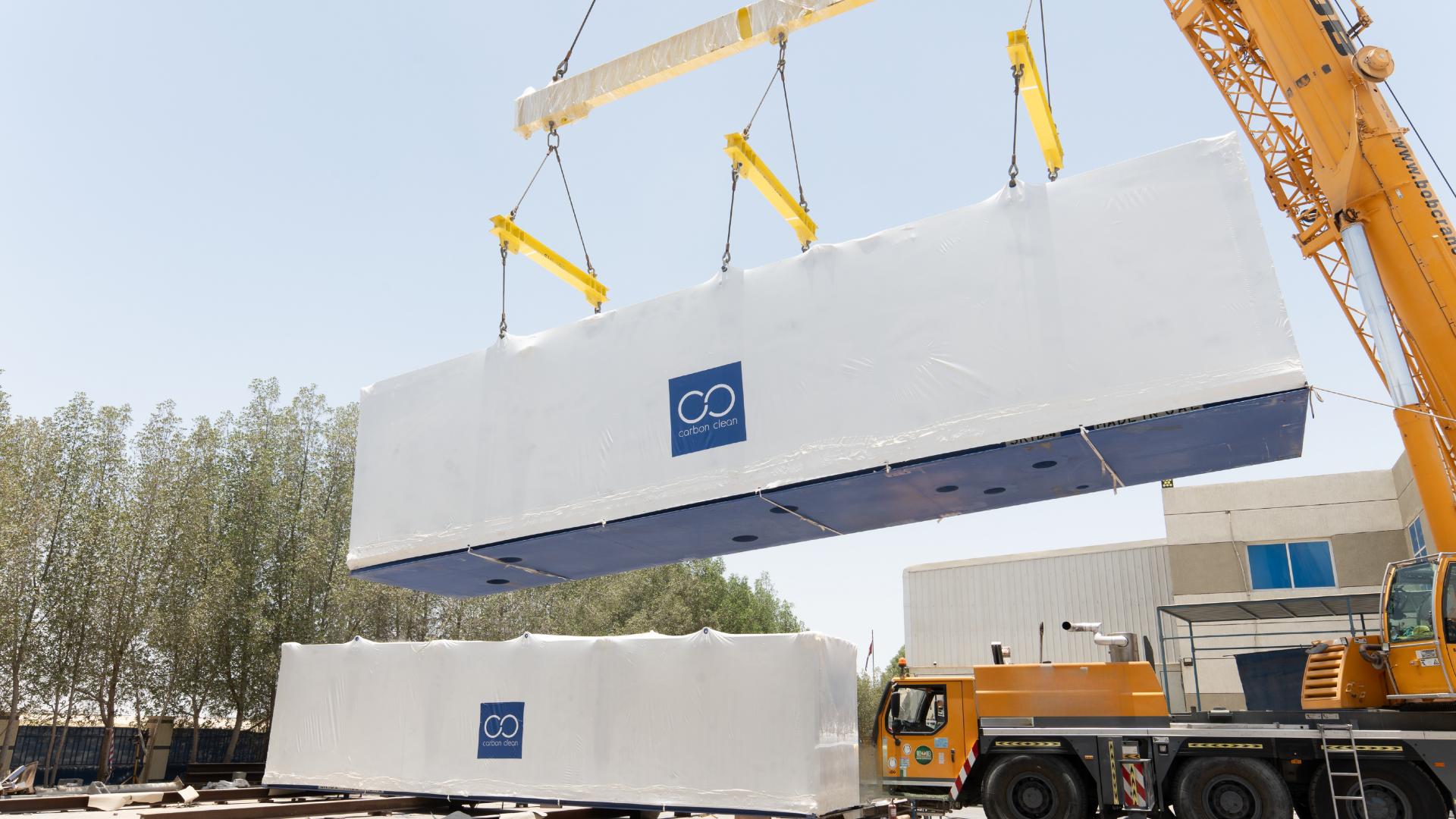
It's a viable model that can move the dial in unlocking real-world carbon capture projects. But it relies in big part on the development of capture technology that is optimised for small and medium size emitters, such as Carbon Clean’s industry leading CycloneCC technology. With a unit footprint reduced by up to 50%, steel requirements reduced by 35%, and costs reduced by up to 50% compared with conventional capture technology, CycloneCC is an important component of the aggregator approach. As a fully modular capture technology which can be pre-fabricated, it makes deployment on smaller industrial sites technically viable and cost-effective.
This also highlights a second opportunity for future allocations to seize: prioritising innovative technologies that offer true repeatability. Achieving large-scale deployment will depend on solutions that can drive down costs through modularity and continuous improvement, not solely on today’s established technologies. Future rounds should build this expectation into their design and support innovative approaches from the outset.
There is a significant opportunity to scale carbon capture. If policymakers respond to industry feedback and back innovation in both technology and commercial models, the sector can move decisively forward. And if we truly start backing the models we know can work, we can expect real progress across the industry.
Related insights
The UK has the carbon capture technology – now it needs delivery models that work

CEO Statement on a transformative moment for UK CCUS: A new selection model for the East Coast Cluster

 Join our Newsletter

