

India’s carbon capture opportunity: From policy ambition to commercial deployment
Having lived in Mumbai for several years, returning to a city I called home was particularly eye-opening. What struck me throughout the visit was not simply the pace of innovation and investment India has made in such a short space of time, but the shared enthusiasm among UK and Indian businesses and policymakers to turn opportunity into commercial delivery.
For Carbon Clean, founded in India in 2009 and headquartered in the UK, that connection is particularly meaningful. Three themes in particular stood out for me.
1. CBAM strengthening the commercial case for carbon capture
The EU’s Carbon Border Adjustment Mechanism (CBAM), alongside the UK’s developing carbon border adjustment mechanism, is becoming an increasingly important consideration for Indian exporters.
For energy intensive industries such as steel, cement and fertilisers, the carbon intensity of production will have growing implications for competitiveness in European markets. Businesses therefore need to consider not only their emissions today, but the potential carbon exposure associated with long-term investment decisions.
This changes the conversation around carbon capture and opens up new avenues for demand. For hard-to-abate industries, it can provide a practical route to reducing emissions while maintaining industrial competitiveness and supporting continued economic growth.
My discussions during the visit reinforced that carbon capture is increasingly being viewed as a strategic investment, with policy and carbon pricing helping to strengthen project bankability.
2. India’s policy landscape is creating momentum
India is also taking significant steps towards the commercialisation of carbon capture.
The Union Budget 2026–27 committed approximately $2.2 billion over five years to support carbon capture, utilisation and storage technologies across emission-intensive industries. Alongside this, the development of India’s carbon market is creating another potential driver for industrial decarbonisation.
Policy support matters because the challenge is increasingly not whether carbon capture technology can work but how projects can reach commercial deployment at scale.
3. Data centre growth presents a new opportunity
India’s rapid growth in AI and data centre infrastructure is creating significant new demand for reliable, lower-carbon power.
One insight I hadn’t fully appreciated before the visit was the concentration of India’s data centre capacity in Maharashtra, which accounts for around 65% of the national total. As investment in AI and digital infrastructure accelerates, so too will demand for reliable and increasingly low-carbon electricity.
Meeting this demand will require a range of power solutions. For data centres requiring continuous and highly reliable power, behind-the-metre gas-fired generation integrated with carbon capture could provide an enabling lower-carbon power solution.
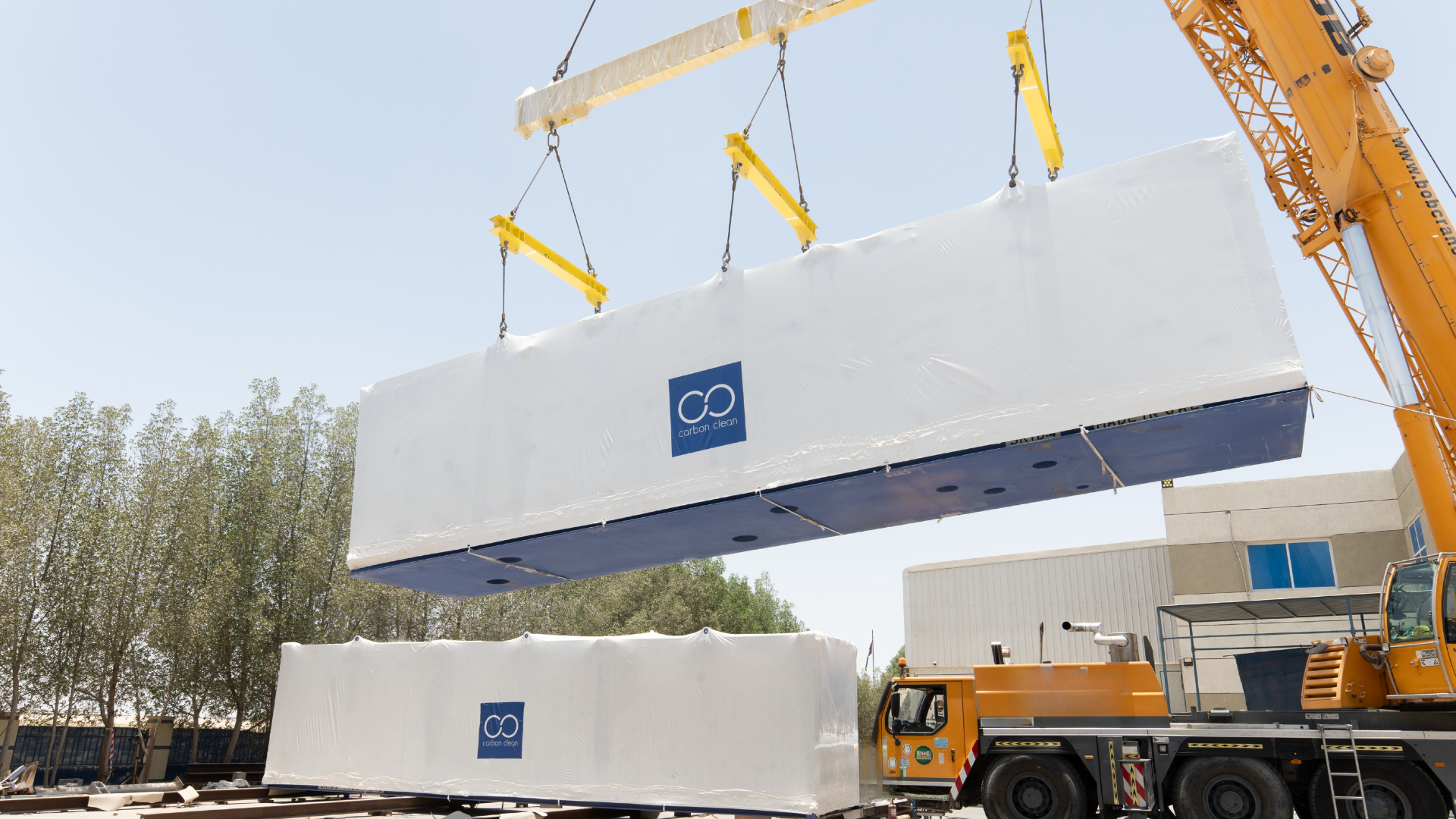
For Carbon Clean, this is already moving beyond an emerging opportunity. Our CycloneCC technology has been validated on low-concentration flue gas produced by gas engines. It’s modular design and small footprint make it particularly well suited to this type of distributed power generation.
Turning UK-India collaboration into commercial growth
Perhaps my strongest takeaway from the visit was the potential to translate the complementary strengths of the UK and India into commercial outcomes.
CETA provides an important framework for this next phase of collaboration, creating opportunities to deepen trade and investment between the two countries and support greater deployment of clean technologies.
Carbon Clean is already an example of what that collaboration can look like.
During the visit, we announced the commissioning of a 2 tonnes per day carbon capture pilot plant at our Global Innovation Centre in Navi Mumbai. The facility is advancing the development, testing and validation of next generation carbon capture technologies, helping accelerate innovation towards commercial deployment.
Alongside this, our UK advanced manufacturing partnerships support the production of our modular carbon capture technology, creating the potential to grow British exports as deployment scales in India and other international markets.
My visit showed me that as CETA aligns policy incentives and export dynamics across the UK and India, Carbon Clean is uniquely positioned to translate this momentum and new opportunities into bankable, large-scale commercial growth.
Related insights
The UK has the carbon capture technology – now it needs delivery models that work

CCS tender delay and withdrawals: Lessons in risk, readiness and reinvention
 Join our Newsletter

